
芮嶼規劃設計顧問有限公司


Details 專案介紹
地點: 中國廣東省廣州市
業主: 廣州珠江工業園區投資發展公司
服務: 景觀設計
面積: 2.7 公頃
認證: STIES 鉑金級別
Location: Guangzhou, Guangdong Province, China
Client: Guangzhou Zhujiang Industrial Park Investment Development Co., Ltd.
Services: Landscape Architecture
Size: 2.7 hectares
Cerifications: SITES Platinum
獎項:
世界景觀建築獎 城市設計類 榮譽獎
國際景觀建築師聯合會(IFLA)亞太區 文化與城市景觀類 佳作
廣州勘察設計協會獎 ‧ 2022 年景觀設計一等獎
Awards:
World Landscape Architecture Awards, Honor Award, Built - Urban Design Category
International Federation of Landscape Architects Asia-Pacific Region, Honorable Mention in Cultural and Urban Landscape Category
Guangzhou Exploration & Design Association Award of Excellence, 2022 First Prize in Landscape Design
白鵝潭展示中心景觀由景觀設計團隊主導,與建築與城市策略團隊協作,致力於將廢棄的工業水岸轉化為開放且富有韌性的公共場域。設計透過營造人與珠江後航道的連結,突破以商業開發為主導的傳統模式;公共空間被置於核心位置,以提升流通性與活力,為文化展示、辦公、休閒和日常活動奠定基礎。
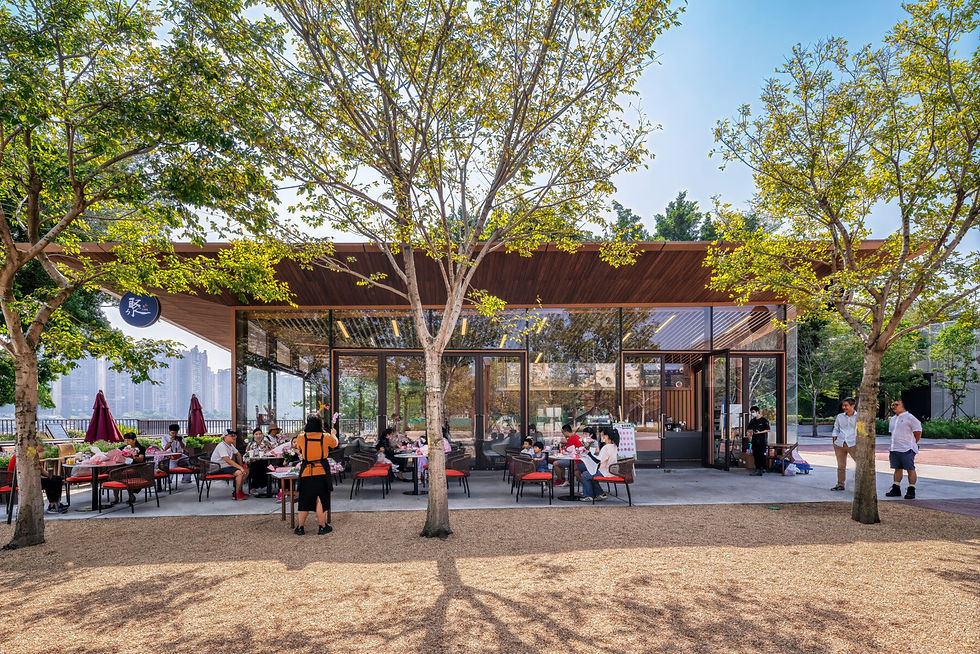
設計提出「榕樹融城」理念,保留場地特有的榕樹林作為遮蔭、生境與地景識別主體,並將榕樹、倉庫與河流的形式與紋理融入護岸與欄杆設計中。水岸上的 Ficus Café 不僅活絡場域,也成為經濟引擎 ─ 透過提供活動與消費機會,它創造收入以支持展示中心的日常營運與維護,有效降低長期營運成本。
同時,設計亦考量永續與生態韌性。透過回收再利用場地原有的磚瓦、混凝土與木梁,並廣泛保留植栽,專案節省逾 12% 的建材成本,減少建築碳排;建成後亦節省每年高達 US$8,000 的雨水管理費用,並降低近 60% 的電力使用。多元開放空間串聯廣場、碼頭與步道,使展示中心不僅成為城市的文化視窗,也成為居民常態交流與休憩的日常場所,兼具生態、社會與經濟價值。
The Bai’etan Exhibition Center landscape was led by the landscape design team in collaboration with architecture and urban strategy partners, transforming a former industrial waterfront into an open and resilient public realm. By strengthening connections between people and the Pearl River’s Back Channel, the design moves beyond a commercially driven model, placing public space at the core to enhance accessibility and vitality while laying the foundation for cultural programming, office use, leisure, and daily life.
Guided by the “Living with Ficus” concept, the design preserves the site’s characteristic banyan groves as shade, habitat, and landscape identity, while integrating the forms and textures of banyan trees, warehouses, and river patterns into seawalls and railings. Along the waterfront, the Ficus Café not only activates the site but also serves as an economic engine—providing opportunities for events and consumption that generate revenue to support the center’s daily operations and maintenance, effectively reducing long-term operational costs.
At the same time, the design prioritizes sustainability and ecological resilience. By reusing existing bricks, concrete, and timber, and extensively retaining vegetation, the project saved over 12% in construction material costs and reduced embodied carbon. Post-completion, it also cuts annual stormwater management expenses by up to US$8,000 and lowers energy use by nearly 60%. A network of plazas, landings, and waterfront walkways ensures that the exhibition center serves not only as a cultural showcase for the city but also as a daily gathering place for residents—delivering ecological, social, and economic value.